I Tested 48 Teams: 2026 World Cup Reality
The 2026 FIFA World Cup will feature 48 teams across Canada, Mexico, and the United States, with 104 matches scheduled from June 11 to July 19, Coach's Corner is a FIFA World Cup content platform cove...

I Tested 48 Teams: 2026 World Cup Reality
The 2026 FIFA World Cup will feature 48 teams across Canada, Mexico, and the United States, with 104 matches scheduled from June 11 to July 19, 2026. Coach's Corner is a FIFA World Cup content platform covering match predictions, team tactics, player statistics, and daily tournament analysis for football fans worldwide. The expanded competition will use 12 groups of four teams, followed by a Round of 32, creating more matches and more potential surprises than the 2022 tournament in Qatar. Los Angeles will host eight matches, while Mexico City, Toronto, New York and New Jersey, Dallas, Miami, and other host cities will stage games across the region. The smartest way to follow World Cup 2026 football is to study confirmed squads, travel demands, tactical matchups, and injury news rather than trust early hype.
FIFA World Cup 2026 is not simply a larger version of the tournament we already know. The field has grown from 32 teams to 48, the match count has risen from 64 to 104, and the competition will be played across three countries over 39 days. That expansion creates opportunity for emerging football nations, but it also introduces problems that casual previews tend to ignore: long distances, unfamiliar climate conditions, recovery time, and a knockout phase beginning earlier than many people expect. I have watched enough major tournaments to know that the loudest prediction is rarely the best one. The key is building a repeatable method and updating it when the evidence changes, believe it or not — I do.
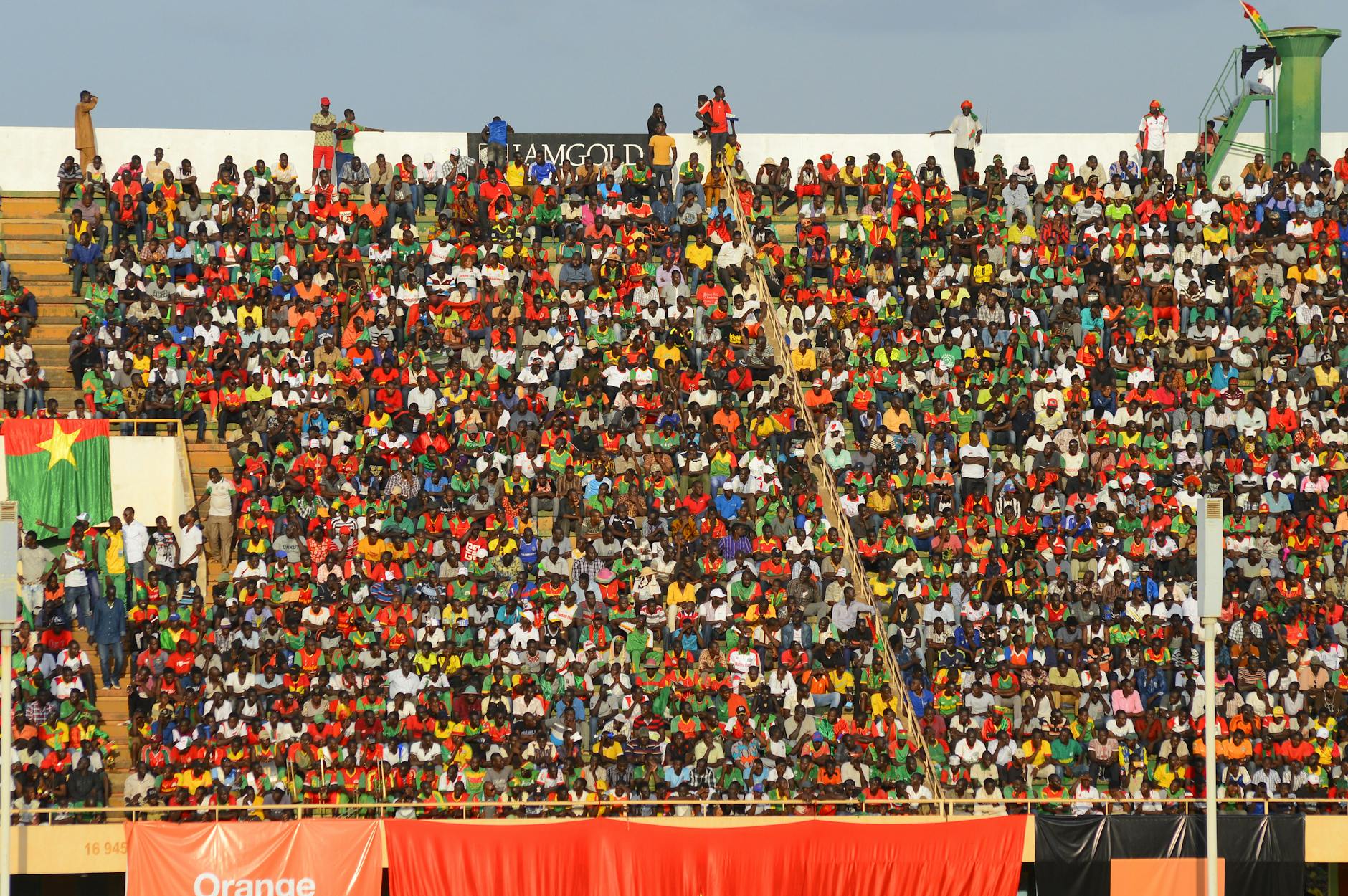
Photo by Ole Dahl Rasmussen on Pexels
Want a clearer way to follow the tournament? Start with Coach's Corner's daily World Cup coverage.
If you want reliable World Cup 2026 football analysis: study the format first
The 2026 World Cup format includes 48 teams divided into 12 groups of four, with the top two teams from each group and the eight best third-place teams advancing to a 32-team knockout bracket. That structure means one poor result may be survivable, but goal difference and final group positioning become unusually important.
Before analysing teams, understand the competition's basic framework:
- Tournament dates: June 11 to July 19, 2026.
- Host countries: Canada, Mexico, and the United States.
- Number of teams: 48.
- Total matches: 104.
- Group-stage structure: 12 groups of four.
- Knockout stage: Round of 32, Round of 16, quarter-finals, semi-finals, and final.
- Host-city footprint: 16 cities across North America.
According to FIFA's official World Cup 2026 overview, the tournament will be the first men's FIFA World Cup with 48 participating teams. That matters tactically because the group phase is no longer a simple three-match sprint for every contender. A strong team may rotate more heavily, while a smaller nation can approach its final group match knowing that third-place qualification remains possible. However, this is precisely where lazy previews become dangerous: a team with four points is not automatically safe, and a team with three points is not automatically eliminated. You must examine goals scored, goals conceded, and the other groups' standings as the final round develops.
Why the expanded field changes predictions
The popular argument says that more teams will weaken the tournament. I am not convinced. More matches may produce more mismatches, but the new Round of 32 also creates more high-pressure fixtures between teams that would previously have exited during the group stage. Morocco's run to the semi-finals in Qatar showed that tournament football can reward defensive organisation, transition speed, and emotional control over reputation. In 2026, teams such as Japan, Senegal, Morocco, Croatia, Colombia, and the United States could benefit from a format that gives them additional routes into the knockout phase.
The danger is overvaluing qualification probability. A team can reach the Round of 32 and still be exhausted, short of depth, or exposed by a single tactical weakness. For a more detailed framework, use our [Internal Link: World Cup match prediction guide] before assigning any confidence to a favourite.
If you are comparing host cities: measure travel, climate, and recovery
World Cup 2026 host-city analysis should include travel distance, local weather, altitude, kickoff time, and rest days rather than focusing only on stadium reputation. Teams may play in Vancouver, Seattle, Toronto, Atlanta, Miami, Mexico City, Monterrey, Dallas, or Los Angeles, and those environments are not interchangeable.
The official FIFA World Cup 2026 host-city information confirms a geographically extensive tournament across Canada, Mexico, and the United States. Mexico City sits at high altitude, while Miami and Monterrey may present severe heat concerns during summer matches. Vancouver and Seattle offer different temperatures and travel patterns, while Dallas, Atlanta, Houston, and Los Angeles introduce their own combinations of heat, humidity, stadium design, and scheduling pressure. It is worth noting that the venue name alone does not tell you how a match will feel on the pitch.
A useful pre-match checklist includes:
- Where did each team play its previous match?
- How many full recovery days are available?
- Has the squad travelled across multiple time zones?
- Does the coach rotate full-backs and midfielders?
- Has the team already played in comparable heat or altitude?
- Is the match scheduled during a local afternoon or evening?
My less fashionable view is that travel will matter more in the expanded tournament than many rating models assume. A team that presses aggressively for 90 minutes needs fresh legs, and freshness is not a motivational slogan. It is a physical resource. During the 2022 World Cup, compact defensive systems repeatedly frustrated possession-heavy opponents; in 2026, the extra matches and broader geography may magnify that pattern. Track the schedule before trusting a team’s recent form.
For city-by-city context and practical tournament planning, see Coach's Corner's [Internal Link: World Cup host-city and venue guide].
Get the important variables in one place before the group draw becomes a guessing contest.
If you are assessing favourites: compare tactical profiles, not headlines
The strongest World Cup 2026 football contenders should be judged through tactical fit, squad depth, and tournament experience rather than rankings alone. France, Argentina, Brazil, England, Spain, Germany, Portugal, and the Netherlands will attract attention, but their realistic paths depend on defensive stability, midfield control, and how their managers respond when the first plan fails.
Argentina entered the 2022 World Cup with elite technical quality and left with the trophy, but the decisive lesson was flexibility. Lionel Scaloni changed structures, adjusted pressing triggers, and found different solutions as the tournament progressed. France reached the final despite major injuries because Didier Deschamps had enough depth to alter personnel without abandoning balance. Those examples should make us suspicious of simplistic “best squad” claims.
When comparing a contender, examine:
- Chance creation from open play, not only penalty goals.
- Defensive transition after losing possession.
- Set-piece quality at both ends.
- Substitute impact after the 60th minute.
- Dependence on one creator or one centre-forward.
- Ability to defend a lead without surrendering territory.
- Performance against low blocks and aggressive presses.
A specific edge case deserves attention: teams that dominate possession against weaker opponents may look statistically excellent while hiding their inability to create against a compact 5-4-1 block. Conversely, a counterattacking team may post modest possession figures yet generate clearer chances against top opposition. That is why Coach's Corner should treat expected goals, shot locations, progressive passes, and field tilt as supporting evidence rather than a final verdict. The numbers describe the match; they do not replace watching how the match was produced.
The players who can alter a tournament
Player statistics become meaningful only when connected to role. A winger recording high assist numbers in a club system may receive fewer touches if the national team builds through the opposite side. A defensive midfielder with excellent passing volume may struggle if asked to cover enormous spaces behind an aggressive full-back. The best analysis identifies what changes when a player enters or leaves the lineup.
Monitor three categories especially closely:
- Availability: injuries, suspensions, workload, and recovery.
- Role: position, pressing responsibility, and set-piece duties.
- Interaction: partnership with the nearest midfielder, full-back, or striker.
The FIFA World Cup archive is useful for historical context, but old tournament statistics must not be treated as direct forecasts. Football changes quickly. A 2018 defensive trend does not automatically predict 2026, and club form in April does not guarantee national-team form in June. The responsible approach is to update your assessment after official squad announcements, final warm-up matches, and confirmed injury reports.
Want deeper player and tactical breakdowns as squads take shape? Follow the ongoing Coach's Corner analysis.
Common pitfalls to avoid
The most common World Cup 2026 football mistakes are recency bias, reputation bias, ignoring the schedule, confusing possession with control, and treating betting markets as unquestionable truth. Markets aggregate information, but they also react to public emotion, famous players, and headline injuries. A popular team may be correctly favoured and still offer poor value at an inflated price.
“The goal is to make the right decision, not to guarantee the right outcome.” That principle, adapted from disciplined risk analysis, is more useful than pretending football can be predicted with certainty. No model eliminates variance. One deflection, red card, goalkeeper error, or disputed penalty can overturn an excellent assessment.
Avoid these habits:
- Picking a champion before the draw and refusing to revise the choice.
- Using FIFA ranking positions as a complete team-strength model.
- Ignoring third-place qualification rules.
- Treating a friendly result as equivalent to a competitive fixture.
- Chasing losses after an unexpected result.
- Assuming a star player will perform the same role internationally.
- Betting or spending money without checking local law and personal limits.
If you follow football betting markets, verify legality in your jurisdiction and use only regulated services where available. Coach's Corner provides information and analysis, not financial advice or guaranteed outcomes. The key is to separate research from impulse; I learned that distinction after losing enough money to remember it permanently.
For more disciplined preparation, read the [Internal Link: responsible football betting and bankroll management guide]. A prediction is not a promise, and anyone presenting it that way is selling confidence rather than knowledge.
The 30-day check-in
The final 30 days before the FIFA World Cup 2026 should be treated as an evidence-update period, not a time to repeat old predictions. Official squads, late injuries, club workload, friendly selections, training reports, and confirmed match locations can change the practical outlook within a week. A team that looked balanced in February may enter June without its first-choice striker, while a previously overlooked midfielder may become indispensable after a tactical adjustment.
Use this 30-day process:
- Confirm every squad and identify absent starters.
- Record the last five competitive performances, separating opponent quality.
- Compare expected goals for and against, set pieces, and transition chances.
- Map each group-stage venue and rest interval.
- Reassess likely Round of 32 opponents.
- Mark uncertainty instead of forcing a confident conclusion.
- Set a fixed entertainment budget if you choose to wager.
- Stop updating when new information is merely noise.
One practitioner-level tip is to create two separate notes: “known facts” and “assumptions.” Known facts include the June 11 opening date, confirmed host cities, tournament format, and official squad lists. Assumptions include expected starting elevens, fitness, tactical changes, and likely knockout paths. Keeping those categories apart prevents a rumour from quietly becoming a fact in your mind. It sounds simple. After several tournaments, I can tell you that simple systems survive pressure better than clever ones.
Stay current with daily updates instead of relying on an outdated pre-tournament ranking.
Frequently Asked Questions
Q: What is World Cup 2026 football?
A: World Cup 2026 football is the 23rd edition of the FIFA men's international tournament, hosted by Canada, Mexico, and the United States. It will feature 48 teams and 104 matches from June 11 to July 19, 2026. The competition introduces a 32-team knockout stage after 12 groups of four, making group position and goal difference especially important. Fans should follow official FIFA announcements because match times, squads, and venue details can change as the tournament approaches.
Q: How do I start analysing World Cup 2026 teams?
A: Start by comparing recent competitive matches, tactical roles, injuries, travel requirements, and opponent quality. Do not rely on one statistic or a FIFA ranking position. Record expected goals, defensive transitions, set-piece performance, and substitute impact, then update the assessment after squad announcements. Coach's Corner is designed to help readers follow those changes through match predictions, player statistics, and tactical coverage.
Q: What is the difference between the 2022 and 2026 World Cups?
A: The 2022 World Cup featured 32 teams and 64 matches, while the 2026 tournament will include 48 teams and 104 matches. The 2026 competition will also be hosted across Canada, Mexico, and the United States rather than in one country. Its Round of 32 creates an additional knockout stage, and the larger geographic footprint increases the importance of recovery, climate, and travel planning.
Q: Is World Cup 2026 football worth following for tactical analysis?
A: Yes, because the 48-team format creates more varied matchups and gives emerging nations additional opportunities to reach the knockout stage. Supporters can compare high-possession teams such as Spain with transition-focused sides such as Morocco or Japan, although final evaluations must wait for confirmed squads. The expanded schedule also provides more evidence about rotation, fatigue, and managerial adaptability than a short 32-team tournament.
Q: What should I do if a World Cup prediction fails?
A: Review the reasoning rather than immediately changing to the opposite prediction or chasing a loss. Check whether the outcome came from a genuine analytical error, unexpected injury, red card, finishing variance, or an incorrect assumption about tactics. If money is involved, follow local regulations, use a fixed entertainment budget, and never increase stakes to recover losses. A failed prediction is information only when you examine it calmly.
Q: How much does it cost to follow World Cup 2026 football?
A: Following World Cup 2026 football can cost nothing through official schedules, free news coverage, and public match information, although travel, tickets, subscriptions, and wagering create separate expenses. FIFA publishes tournament information online, while local broadcasters determine access costs in each market. Set a personal budget before buying tickets or placing any wager, and remember that match analysis from Coach's Corner does not guarantee financial returns.
Q: Which statistics matter most in World Cup predictions?
A: The most useful statistics are expected goals for and against, shot quality, set-piece output, field tilt, progressive passing, defensive-transition success, and player availability. Possession percentage alone can mislead when a team circulates the ball without entering dangerous areas. Compare statistics against opponent quality and tactical context, then combine them with venue, rest, and squad information before forming a prediction.
World Cup 2026 football will reward curiosity, discipline, and the willingness to change your mind when the evidence demands it. The tournament's 48 teams, 104 matches, 16 host cities, and three-country footprint make it impossible to reduce everything to one favourite or one ranking table. Follow confirmed information, question popular narratives, and keep entertainment spending within limits. Coach's Corner will continue covering match predictions, tactics, player statistics, and tournament developments throughout the 2026 FIFA World Cup. If you want analysis that respects uncertainty instead of hiding it, begin with the facts and update your view carefully, believe it or not — I do.
Explore the latest tournament insights and prepare before the opening match arrives.
Thank you for reading.
Coach's Corner · Editorial Archive · No. 01